
After making his name with The Guardian-approved folk band The Mariner’s Children, Benedict Benjamin first stepped out as a solo artist with his 2016 debut, Night Songs. After following up with the well-received Truant in 2019, Benedict, like so many musicians was met with the logistical and emotional nightmare that was 2020. Unable to work with the band that toured Truant with him, and deprived of the influence of any collaborators, Ben was forced to reassess how he made music, while deprived of any sort of musical income, he was also forced to take a full-time job to look after his young, and growing family.
These changes left Ben questioning everything, why he makes music and how he was going to do that in the circumstances he was facing. He started with probably his most difficult challenge, creating rhythm tracks, without a rhythm section. He dived into old jazz records, sampling complex drum solos, taking their irregular patterns and then reshaping them into something regular. It forced him to write in rhythms outside of his comfort zone, as he puts it, “it was about following all those new ideas and seeing where they led”. Ultimately it led to his most varied and dynamic record yet, Tunnel which he shared with the world earlier this month.
While necessity led to a change of musical approach, the pandemic also brought about an inevitable change in the theme’s Tunnel explores. Perhaps more than ever Ben shares with his listeners his own worries, in particular his role as a parent, bringing his children into the shadow of an uncertain future. Never more evident than on the pounding jazz-psych strains of Furlough Blues, where he explores that sense of repetition and panic that came with lockdown, “every day’s the same there’s no difference, used up all my good ideas I’m drowning in time with no ending”. Elsewhere the gentle strains of Hanging By A Thread, asks if it is possible to be a strong presence for others while you feel like you’re falling apart, as he sings, “I lost my grip a while ago and haven’t found it yet but I will keep searching I will smoke it out for you”.
Fatherhood is a theme running throughout the record, never more openly than on Nursery, where to a backing of Iron & Wine-like guitars, he lays bare the fear of never being enough and only having love to fall back on, “all of the guilt that you feel daily, that you’re failing in some way you can’t determine, all of the pain that you must handle pales in comparison to the love in my heart”. Perhaps the most poignant of the lot is Sad Song, it finds Ben laying out his past mistakes and challenges, wanting his child to not go through the same pain, while also knowing it is a part-and-parcel of being alive, “I know when you grow up you’ll know your share of pain, I learned a lot from mine and you’ll do the same”
If the record is one of thematic insecurity, musically Benedict Benjamin has arguably never sounded more sure. Take the fabulous White Noise, one of my favourite singles of the year to date, it feels like a song with real focus, the swirling almost North African-sounding rhythm track, accompanied by Kevin Morby-like guitars and Ben’s lightly distorted vocals that seem to go out in search of an honest conversation, “it’s all noise until someone starts singing from the heart, it’s all noise till you take a long look into the dark”. While the record flitters rapidly between genres, it never feels aimless, whether it’s the Byrds-like psych-pop of Despite, or the low-key electronica of Wonder How You Are. I’m particularly taken with Petrol, it feels like the lost middle ground of Squirrel Flower and My Morning Jacket, as Ben sings his weary road song, longing to be home with the ones he loves, “my heart still doesn’t beat right until I’m home sleeping by your side, it’s not like it’s not had enough practice, guess it won’t ever feel right”.
Marking the release of this wonderful album, I recently got the chance to ask Ben all about it, discussing the influence of fatherhood on his songwriting, finding musical freedom in the constraints of a global pandemic and the fragility of trying to make a living as a musician.
FTR: For those who don’t know, who is Benedict Benjamin?
He is a cis man whose real name is Ben Rubinstein and he/I live in London with my partner and kids. I was in a few bands before making music as Benedict Benjamin but I’m on my third BB album now and I’m having fun.
FTR: You’ve just released your first album in four years, what can you tell me about the recording process?
So it was recorded at home during lockdown on my computer with a pretty modest set up. I’d recorded demos myself before but had never invested enough time or money to record my own masters and for all the terrible stuff that that time entailed it did give me the space to finally do that. I say that as though I had always meant to do that but never gotten round to it, I think in reality I’d gotten lazy and had just thought I know people who are brilliant engineers ( all the previous BB albums were recorded by Dan Blackett, who mixed this one) so I’ll just let them do that and I’ll do the writing and the playing and that will be fine! But that time and place forced me to sort out my own set up and I’m really glad it did because it opened up so much creativity and gave me loads of freedom.
FTR: It’s obviously been a while since your last record, what made this a good time to return?
I made this album in 2020 though I guess the process of finalising mixes was a bit drawn out but the main bulk of it was made then. I guess the reason it took so long is that my whole approach to having a career as a musician and investing everything into making that my life was completely shaken by covid. The whole means of supporting a life and a family through music has been hard and getting harder for so long but covid made it clear how fragile it all is. So I got a full time job and had a second child and I’ve been waiting for things to feel settled enough to go through the struggle of putting a record out! And it’s like having a baby, there’s never a ‘right’ time in your life to release a record but I’m happy I waited a bit and I’m really enjoying sharing music with the world again now!
FTR: You’ve spoken of the influence of fatherhood on this record, how do you think that experience has affected you as a songwriter?
It’s kind of something that everything I write about is filtered through now, even songs that are ostensibly not about it like ‘Hanging by a Thread’ or ‘Petrol’, parenthood is always the context. So I need to sort out my mental health or I need to get home or feel guilty about being away in large part because I’m a parent and I need to pull my weight in looking after my kids. But then there are songs that are more directly about it like ‘Baby’s Crying’ on the last album or ‘Nursery’ on this one. I do sometimes worry that people are gonna get bored of me going on and on about it! But I try not to think about that as I’m gonna write about my life and its by far the biggest and most intense thing in it right now. Hopefully I do it in a way that other people can connect with or find interesting.
One of the ways it has definitely changed things for me as a songwriter though is that now I have hardly any time to write! Which is obviously not a great thing but it does force you to get on with it when you do have some time. I’ve noticed that I’m much more efficient with writing now than I was before I had kids which I’m really angry at my former self about! If I could have had this work rate then I’d be on album 24 by now.
FTR: I read how you were forced to make the record without any outside collaborators, did you enjoy that way or working? Do you think it’s something you’d do again?
I loved the freedom that recording at home with no intermediary people gave me, that’s no slight to people I worked with before but being able to record independently was pretty liberating and obviously cheaper, so I definitely want to work like that again. It could be totally flexible, so if I had the energy I could record if I had some time in the afternoon or after I put the kids to bed. And then because of that I could try things that I might not try otherwise, things that I might not have been confident expressing to another person or didn’t have the vocabulary to describe.
I would like to be more collaborative at some point but this method suits my life at the moment. I really enjoy playing with the musicians in my band so I’d like to involve them at some point. And I had a nostalgic period recently where I relistened to some stuff from my old band, (The Mariner’s Children) and it reminded me how fun it was to collaborate and how different that record is to stuff I’ve worked on on my own. So it would be nice to work in that way again one day but not sure how that could happen logistically.
Should also mention that I didn’t do this record totally on my own. When I wanted live drums I would program an arrangement and then get a nice man named Alex Reeves to play and record it, which he’d then send to me to work with. And Dan Blackett who I’ve worked with on every BB album mixed this one too.
FTR: I was fascinated by how you made the rhythm tracks for the album. Where did the idea to sample old jazz records come from?
Well it was primarily borne out of necessity during Covid as getting together with my band was impossible, and as playing live seemed at that point like it might never happen again I didn’t have to worry about how hard it would be to recreate something live. But I also have always loved hip hop and Endtroducing, Unkle and Pre-Emptive Strike by DJ Shadow as well as the tracks he produced for the Solesides album mean a lot to me. I loved the huge drum sounds and loops he used to make – so I wanted to experiment with doing something similar.
I liked the idea of looking at drum solos that weren’t regular and then looping a tiny bit of them to turn them into something that was. As a starting point for writing it was really great as it would bring things out of me that I would never normally play. In that way even though I was alone it kind of felt like I was collaborating as the first element of the song was something that I had not come up with. I mean I created the loop but I didn’t write the rhythm. It felt good to start writing something as a response to something else.
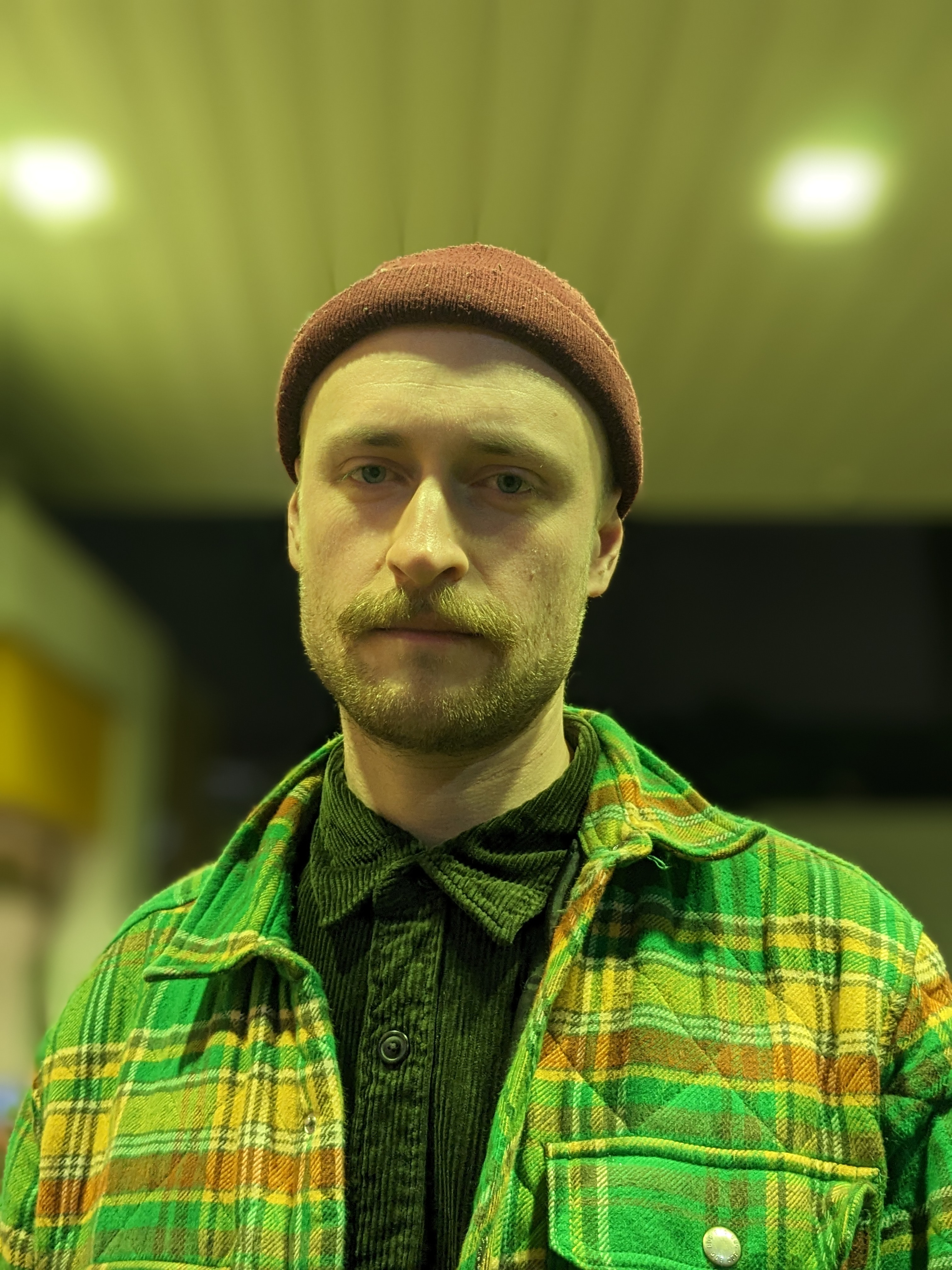
FTR: I would say this is your most eclectic record to date, was it a conscious decision to try and explore more genres this time around?
Not really, I think it had a lot to do with this being the first album I self-recorded which meant there was a lot less self censorship. Maybe those thoughts about not worrying about how to recreate something live played a part too but I wasn’t really writing with an album in mind, I was just writing as a way of escaping the covid hell. It definitely came from just feeling a lot free-er. Which I guess is kind of funny as I, and everyone else, were basically under house arrest when it was being made
FTR: Why do you make music?
That’s a really difficult question!
During lockdown it was effectively therapy and I was significantly more tense on the days when I wasn’t making music. So I think it does function for me as a way of getting my insides out and putting things in perspective. But that maybe sounds a bit clinical. I really love singing and playing the guitar and melody and words. It still feels good and magical to me even though I’ve been doing this a while now and I know the magic trick.
There was an extreme moment during lockdown where I was asking myself if music is now over and no one will ever hear what I play again, does that have a bearing on whether I keep making music? I think there is a big narcissistic part of me that needs the feedback an audience provides when I write a song. And if I try to sing about an emotional experience I really do want to know whether it’s something that other people can connect with too, whether it captures something they recognise. I didn’t realise until then how much those things meant to me.
But I would, and I’m sure one day will, keep writing whether anyone is out there or not as it’s the best thing I know how to do.
FTR: What can people expect from the Benedict Benjamin live show?
No crazy stage show or anything! Just a five piece band playing Benedict Benjamin songs, which I think is more than enough! I’m really excited to play these songs live, it’s been really fun adapting the more sample based ones. It’s gonna be fun, I love playing shows. It has been a while though so I worry I’m gonna be rusty but I’m excited.
FTR: How have you found releasing an album in 2023, does it feel like a difficult time to be a musician? What’s the best way for people to support creativity at this time?
I mean I don’t wanna pretend I’m a music industry expert, I’m not. I make a record, try to promote it as much as possible and then I leave, live my life and try to make another one! I’m not here the whole time. But it’s been the case for as long as I’ve been making music that things are always getting more difficult. Everything is so much more expensive so rehearsal spaces are disappearing and the remaining ones are getting really pricey, like I’d say double what they were in 2019. And rents going up across the board and the cost of living crisis obviously make any musical endeavour tough. There’s so little money in music so it’s really hard to make it a sustainable career and it doesn’t seem like gig fees are being adjusted for inflation!
There is a lot less gatekeeping around info on how you can release something or even make something effectively which is definitely welcome but streaming seems to have stopped lots of people from buying music which is a real shame.
I’ve definitely been getting the sense that all music blogs are finding it really hard right now to stay afloat and to keep the passion going too. That’s something that you will obviously know a lot more about than me and I’d really like to hear your take on it.
FTR: The blogging world has definitely changed a lot. There used to be tonnes of established sites, but now sites seem to start up with great enthusiasm, and then people quickly get disillusioned with it. A big factor is definitely financial, advertising revenue is seemingly non-existent, not that I’ve ever really tried it, and where at one point you could see a career path as a music writer, now if you’re not at Pitchfork or one of the big newspapers you’re not likely to be making a living. Coupled with the fact that most of the more commercial sites are now just copy-and-pasting press releases because that gets more hits for less time.
I remember in 2009 there being a million music blogs around and it felt like the culture was thriving, people would write about any music they were passionate about and it would lead you down so many amazing rabbitholes. Apart from a few brilliant exceptions like this site which really feels like a passion project, I don’t see that anymore. Maybe that’s happening on social media where I’m not aware of it, I don’t know. Can you tell me? Is that still happening?
FTR: I think Social Media does still have people talking about music, but it can be quite toxic and tribal, rather than an interesting discussion. When everything is freely available and there are so many automated ways of discovering music, I’m not sure people feel like they need blogs to find music anymore. To be a music blogger now, I think you have to just love the process of writing and listening, and not worry about whether anyone’s reading it, plus it helps if you really like organising emails.
But about the best way to support artists, buy what they put out or merch they sell at shows and tell your friends about them. Don’t keep them to yourself!
FTR: Do you have other creative outlets outside of music?
Music’s my main thing, I love drawing with my daughter but it’s not something I’ve ever taken seriously. I really enjoyed animating the Furlough Blues video and I really liked making collages for the album but same thing really.
Releasing records is pretty great as it becomes this big project that forces me to carve out time to explore different ways of making art like, film or making collages or animating. I find it hard to block out time to explore new ways of making things that’s not directly linked to music outside of that framework, mainly because of kids.
I work at a museum creating boxes and crates to house ancient objects. It’s not art but there’s a fair amount of creativity involved in that. I like it.
FTR: What’s next for Benedict Benjamin?
I’m getting my band rehearsed, then I’m gonna play some shows and i’m gonna try to just really enjoy them!
I’m also vaguely planning on doing a small release of The Mariner’s Children album that we made but never released. It’s kind of insane as it was made almost a decade ago but I want it to be discoverable so I’m gonna do something about that. That’s it at the moment!
Tunnel is out now. For more information on Benedict Benjamin visit http://www.benedictbenjamin.com/.

 For The Rabbits