
I’m kicking off all things 2026 by looking back over the best of 2025. For me, 2025 was an intriguing year in music. Looking at the albums here, there’s arguably little that links them; no prevailing wind, no specific genre that was charging to the forefront of any cultural zeitgeist. You need only look at the lack of consensus as to what the great cultural moment of music in 2025 was amongst my fellow writers. I’ve barely seen the same album top two “best-of” polls, and with my interest in both music and lists, I read a lot of “best-of” polls.
Music is unquestionably at a tricky moment; there’s a certain malaise brought about by a world that either is, or is made to feel, in constant flux. Why are we wasting our time with music when climate change and war are ravaging the world at large, and we might just be inventing our way out of existence with the onset of an AI revolution? The best answer I can give: why would we not? Music and art have always been there for us in humanity’s darkest hours; it’s exactly when life feels fatally flawed that we need them the most. Whatever the future holds, there will be music, and there will be dancing. As possibly the biggest indie phenomenon of the year, Geese, sang,“there’s only dance music in times of war”, so lace up your shoes and hit the (metaphorical or otherwise) floor, with my favourite records of 2025.
20. The Cords – S/T [Skep Wax / Slumberland]
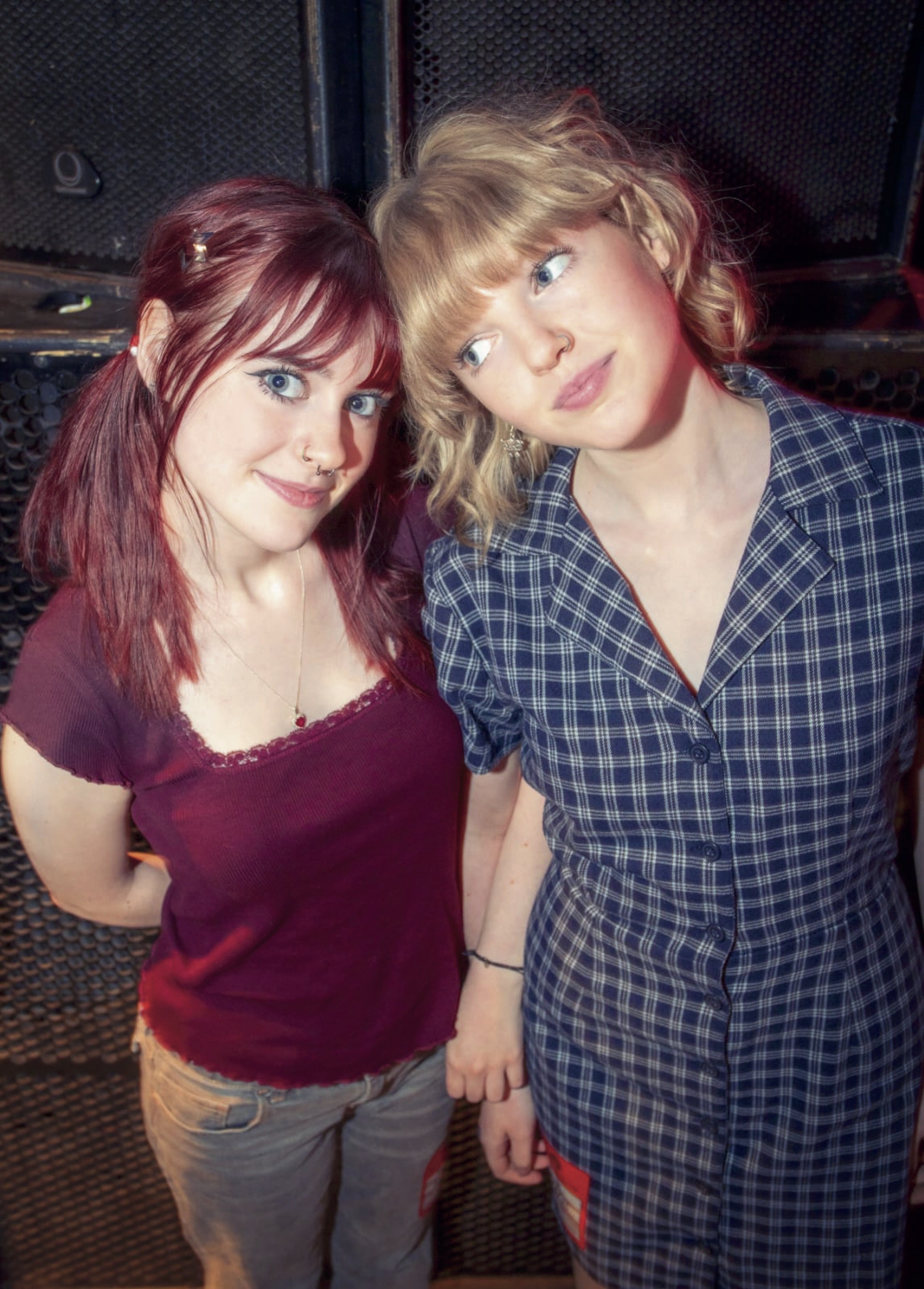
Hailing from Greenock in Scotland, The Cords are the sister duo of Eva and Grace Tedeschi. Having picked up instruments when they were children, the duo soon discovered a love for the sound of the original indie-boom, and, realising very few of their peers felt the same way, formed a band. The pair soon found themselves adopted by the indie-pop scene, sharing stages with the likes of The Vaselines, Belle and Sebastian and Lightheaded, despite barely having any recorded material to show for themselves. It was through those early shows that they found themselves working with two fantastic indie-pop labels, Slumberland Records and Skep Wax, who teamed up to release The Cords’ short, sharp energy shot of a debut album.
One of the great charms of The Cords’ sound is just how simple they keep things. Working with producers Jonny Scott and Simon Liddel, they set about capturing what they do live, not seeking to re-invent it for a studio setting. So yes, there’s the odd moment that called for a bass-player they don’t have, or a keyboard part they lacked the hands to play, yet for the most part, The Cords is just Eva’s bright jangling guitar and reverb-laced vocals and Grace’s primal drum clatter. It’s not a record that slips far from a formula that works, opening track Fabulist sets the scene as it crash-lands with a take down of those who live in their own fantasy worlds set to rapid-fire chords and non-stop drums reminiscent of Literature or Lightheaded. From there, we get variations on the theme. October’s wistful reminiscences have a slightly punkier edge, while Doubt It’s Gonna Change adds a world-weary sigh, “do you mean to be so rude? Don’t you see, you look like a fool? But nothing is gonna change”. Perhaps the stand-out moments are where they push their boundaries. Yes It’s True comes careering into view but takes a turn towards a more gentle shoegazey sound, while closing track When You Said Goodbye really hints at what could come next in its dreamy, gently heartbreaking Alvvays-like pop. Those of a certain vintage could wax lyrical about their indie-pop reference points, yet more importantly, The Cords aren’t afraid to speak to the here and now. Playing loud and free in the face of a world that expects young people to be poised and presentable. The Cords are exactly what the world needs, analogue excitement in the digital age, a timely reminder of what a thrill it is to hear a band so young, talented and very much alive.
19. Lael Neale – Altogether Stranger [Sub Pop]

Lael Neale appeared in this same list back in 2023, with the excellent Star Eater’s Delight. That was a record written after she returned to her native Virginia and felt the need to shake the rural idyl she fell back into with unrelenting noise. Working again with regular collaborator Guy Blakeslee, the follow-up Altogether Stranger was in many ways a natural next step. If Star Eater’s Delight was a transmission from solitude, Altogether Stranger is a record about returning to Los Angeles, stepping back onto the treadmill of modern living and feeling, “like an extra terrestrial landing on a dystopian planet”. LA is less like a setting and more like a character throughout Altogether Stranger, Lael looking out from a “hilltop bungalow”, and observing, “the peculiarities of humanity”, as people went about their strange version of normality.
While the record shifts place and narrative from Lael’s previous work, some things remain, not least her commitment to immediacy and intimacy in her work. As she reflects, “I love doing things the wrong way”, and in shunning the “correct” way to make a pop record, Lael finds something different, a dedication to non-conformity to expectations and doing things her own way. If Star Eater’s Delight was something of a departure from Lael’s earliest material, here it’s more about refinement rather than revolution. Take the fusion of Suicide-like drum rhythms, twinkling omnicord, and guitar swells of the opening track, Wild Waters. It’s familiar, sure, but there’s also a hint of a different mood. It’s perhaps surprising that on her return to the city, Lael has arguably turned the volume down a little. While Star Eater’s Delight had a certain urgency and anguish, Altogether Stranger is more comfortable in it’s own skin, whether it’s the urgent, atmospheric, escapism of Down on the Freeway or the gentle Velvet Underground-like strut of All Good Things Will Come To Pass, with it’s quiet questioning of what we want, what we need and the difference between the two. It’s perhaps side two’s opening track that is the most compelling moment. Tell Me How to Be Here feels like everything great about Lael’s music distilled into one track. It’s the sound of clarity emerging after waking from a woozy dream. Lael’s voice seems to pull the listener through the fog of tumbling Mellotron and gently propulsive guitar loops, as she asks us to look on the oddness of the everyday. The record reaches a close on the suitably titled There from Here, it’s a return to Lael’s more minimalist tendencies, just voice and arpeggiated piano chords, it seems to exist in Schrodinger’s Airport, a place where you are either coming or going, and never really anywhere: “it’s all duty-free, but we pay with this purgatory”. With a title like Altogether Stranger, you might look for oddness, but Lael pointed out she meant it as the noun, that sense of being an alien to both where you are and where you’re from, which permeates every element of a record. In her search for personal belonging, Lael stumbles upon something much wider, a sense that we’re all looking for connection as we bounce from place to place, looking to not be a stranger in a world that’s as strange as it has ever been.
18. The Divine Comedy – Rainy Sunday Afternoons [Divine Comedy Records]

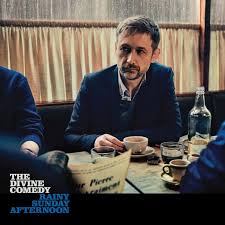
For a band who once had fifteen top 50 singles in a row, The Divine Comedy still seem to somewhat slide under the radar, and I can’t help but wonder if that’s how Neil Hannon, the man who essentially is The Divine Comedy, likes it. Rainy Sunday Afternoons is the band’s thirteenth studio album, and their first in six years, and quite possibly their most sincere since 1998’s career highlight, Fin de Siècle. Neil has always been a songwriter prone to a comic aside from Bang Goes the Knighthood’s bragadocious Can You Stand Upon One Leg, to the feckless protagonist of How Can You Leave Me On My Ow. Here though, we find him in a more contemplative mode. As Neil explained, Rainy Sunday Afternoon was a record designed, “to work through some stuff…everyone should get to make an orchestral pop album once in a while. It should be available on the NHS”.
Throughout the record Neil seems to be writing, fittingly, from the perspective of a man in his mid 50’s; watching his children grow up, his parents grow old, and questioning “mortality; memories; relationships; political and social upheaval”. There’s the beautiful, Invisible Thread, “a bittersweet paean to parenthood”, which features Neil’s daughter on backing vocals and finds him grappling with her ever growing independence and the pieces of himself that leave each time she goes, “I used to think that no one could keep you safe but me, that only I could guide you through life’s crazy tapestry, but now you’re guiding me, so go, spread your little wings and fly”. Elsewhere, his lyrics are on familiar ground, laying out the simplicity of his desires on the Leonard Cohen-like I Want You, or exploring the relationship arc of a lifetime on the Carson McCuller referencing, The Heart Is A Lonely Hunter. If you’ll forgive an entirely biased opinion, I was particularly enamoured with The Last Time I Saw The Old Man. It is a song about Neil’s father’s battle with dementia, which was released shortly after my own mother’s death, a nurse who spent most of her career working with dementia patients and whose favourite band were, you probably guessed it, The Divine Comedy. While it inevitably brings a tear to my eye, it is a genuinely moving piece, as Neil sings of hands, “so fragile and gray I was worried I might break them” and, “talking very strangely in ever decreasing circles”, before it drifts out in a lugubrious fog of smoky strings and descending piano chords. Now if you’re a fan of the band’s more humourous tendencies, Neil thankfully hasn’t entirely given up his wry world view, there’s still room for the surreal brilliance of The Man who Turned Into A Chair and the political parody Mar-a-Lago By The Sea, “how I miss the golden johns in which I pissed, all that ostentatious wealth, the paintings of myself when I was young and free”. A Rainy Sunday Afternoon might conjure up an image of cozy middle-class bliss, but The Divine Comedy’s version seems somehow more intriguing than that, this is Neil Hannon facing up to life like never before, as he sings in the title track, “I feel like I’ve really got the weight of the world, sitting squarely on my two puny shoulders”, so what else to do but write a really quite magical album about it?
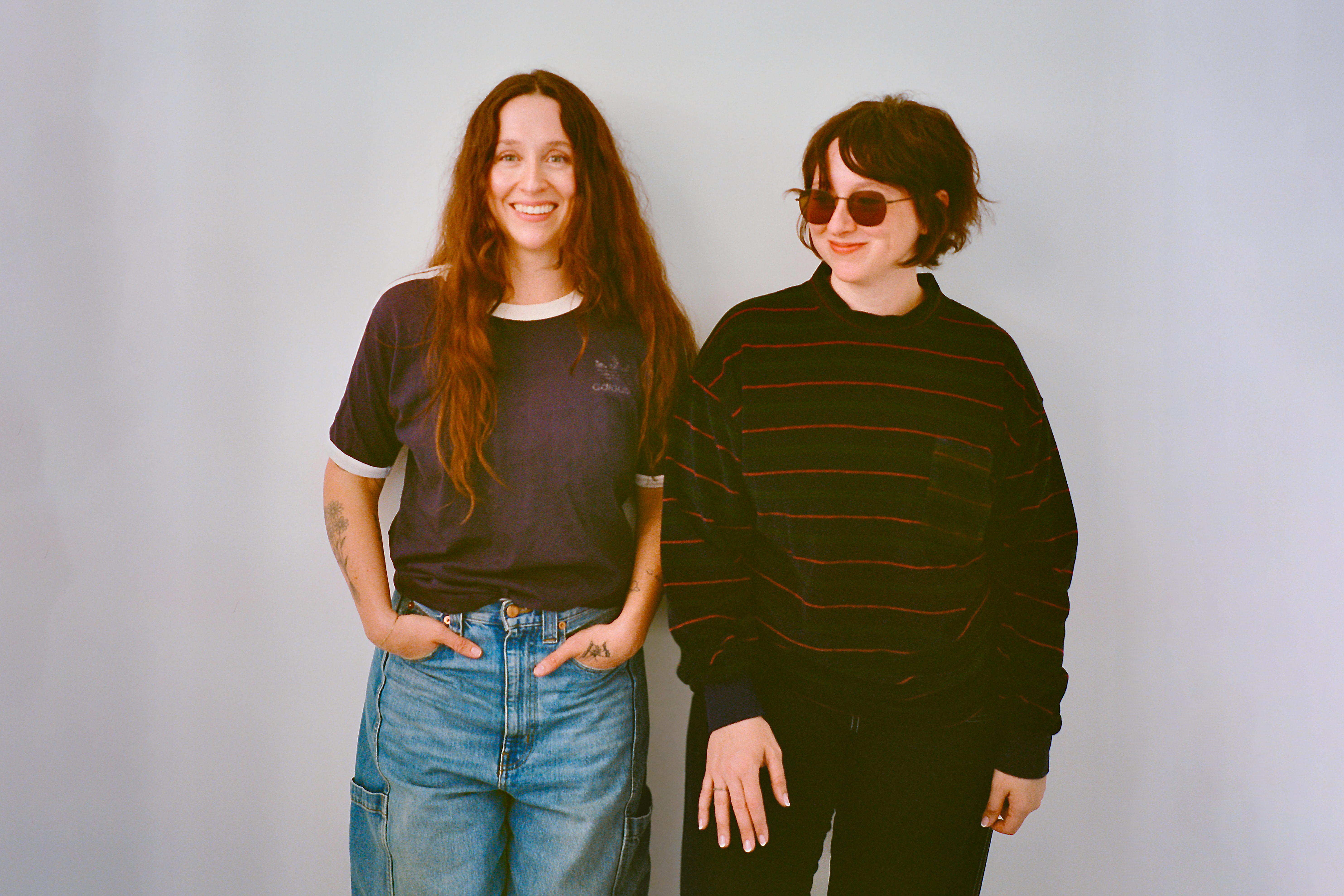
Few albums arrived with more of an impact than Snocaps’ debut. From nowhere arrived a full album of material from the musical sisters Allison and Katie Crutchfield. Their first new music together since the much-adored 2011 P.S. Eliot album, Sadie. It all felt quite fitting, a band formed out of a desire to get back to the basics of the twins making music together as they had in their teens and twenties, releasing an album on a here it is, give a listen basis – no bells and whistles, just straight talking indie-rock.
A key element of the appeal of the Crutchfield sisters has always been their ability to capture the struggle; even as they’ve found relative fame, they have remained delightfully relatable, and here too they seem to revel in singing about the artist’s struggle. It’s perhaps most evident in the opening track Coast, a celebration of taking the hard road and throwing yourself into it: “I got the pedal on the floor or I’m slamming on the brakes, I could never just coast”. It’s a track so key to this record that they even revisit it for the closing track. While the desire to get back to the past is a big factor in Snocap’s existence, they can’t help but show off a few tricks they’ve learnt along the way. Hide brings some delightful Waxahatchee-like country twang as it questions long-running affections, “hang up the phone and wonder how hot do you burn for me”, while Doom has an arena-ready quality, courtesy of the fantastic rhythm section and skyward soaring twin vocals. Equally though there’s always time, thankfully, for a just straight-up brilliant slice of indie-pop, provided by Heathcliff’s bouncing, yelp-along chorus, presented in delightful contrast to the cutting lyrical content which deserves a parental advisory sticker for emotional brutality, “I’ll be the light at the end of the tunnel, high speed train crash, head on send you straight to hell”. Elsewhere, Avalanche is the band at their brightest and poppiest, while I Don’t Want To is a beautiful acoustic interlude that seems to strip everything back to let the melodies shine. It might have been a surprise release, but with the amount of talent involved, there was no surprise to how good Snocaps sounded.
16. Jeffrey Lewis – The Even More Freewheelin’ Jeffrey Lewis [Vintage Voltage]

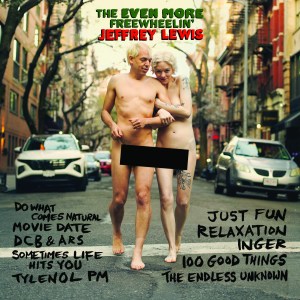
For someone as prolific as Jeffrey Lewis has always been, a six-year gap since his last real album was almost unheard of. There was new music during that time, of course, with Jeffrey Lewis there’s always new music, but nothing you could really get your teeth into. So, after six years how to re-introduce yourself? Well, how about recreating a Bob Dylan album cover, only in the nude, and stealing and improving upon his title while you’re at it? So here we are with The Even More Freewheelin’ Jeffrey Lewis, recorded over four days in Nashville, a rare nod to anywhere other than New York City in Jeffrey’s history. In many ways, it sticks to the classic Jeffrey Lewis, quiet-wordy-one / loud-punky-one blueprint. Sure, he’s playing to the crowd at this point, but thankfully, he’s playing just as well as ever.
Jeffrey Lewis’ lyrics are so acclaimed now that it seems almost unnecessary to point out how good they are. His ability to hit the sweet spot between comical and heart-wrenching is as strong as ever throughout. Take a song like Movie Date, essentially a song about falling asleep in front of films, it manages to simultaneously be a lesson in cinematic history, a humourous reflection of the various stages of relationship, and quietly, just a little bit sad, “soon you’re bobbing far away out on the ocean, and I’m left lonely watching movie’s on the dock”. A special mention should also go to Tylenol PM, a deliciously downbeat-sounding song about sleeping medicine that includes brilliant jokes about both depression-induced product placement and the comparative musical spokespeople for various much heavier drugs. Jeffrey Lewis records tend to borrow from various eras of his songwriting, so finding a thread that ties the songs isn’t always obvious. On repeat listens though, there’s a certain strand of accepting your lot and trying to overthink it. Do What Comes Natural focuses on Jeffrey’s tendency to wallow in nihilism, “if I did what comes natural, I’d just be a black hole, I’d never get dressed or even get out of bed”, while 100 Good Things flips the narrative on it’s head serving as a much needed reminder to enjoy the beauty even in the struggle, “I’ve got good things, so my perspective needs a radical twist, I know there’s reasons I should exist, my life is good I just have to insist”. Probably the standout moment comes in the shape of single, Sometimes Life Hits You, it’s in many ways the archetypal Jeffrey Lewis single. It coos like the Modern Lovers, it struts like Transformer-era Lou Reed, and it has a lyrical breakdown about the relatable pain that comes with essentially just being alive, “you can wear art and wisdom like a bulletproof vest, but sometimes life hits you like a hammer to the chest, and you say ow, fuck, that hurts”. At this point, Jeffrey Lewis is, as he sings in 100 Good Things, “successful, beyond anything I ever could picture, I’m a small but thriving cultural fixture”, and yes, he’s right, he deserves it, a true inspiration for anyone wanting to carve their own niche and not follow the crowds.
15. Dean Johnson – I Hope We Can Still Be Friends [Saddle Creek]
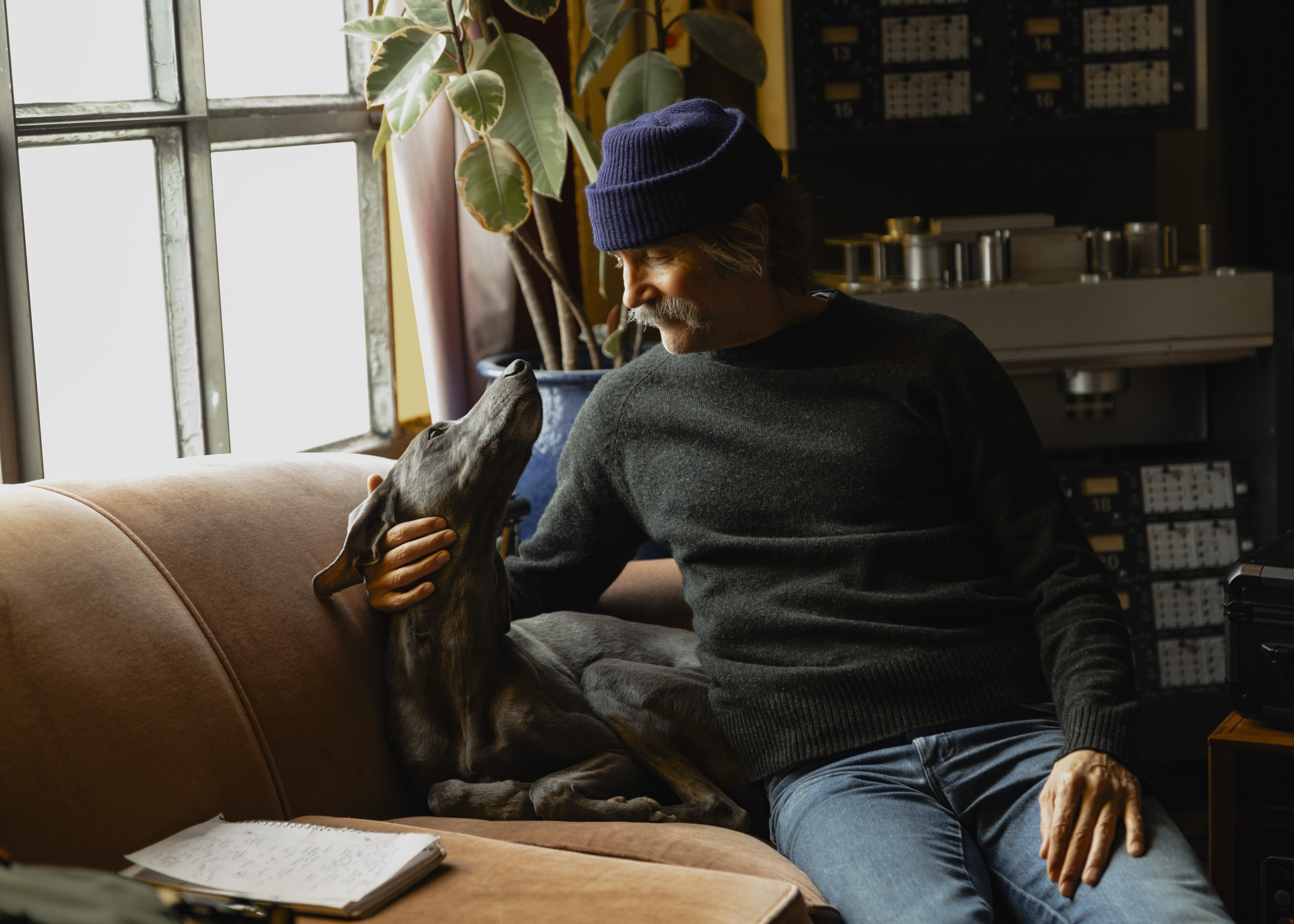
If you’re after a good news story for 2025, look no further than Dean Johnson. Dean spent years as a bartender at Al’s Tavern in Seattle, playing local shows and quietly earning a reputation as his home city’s best kept secret. Then, as he reached his 50s, came the most surprising of breaks: his 2023 album Nothing For Me Please became a sleeper hit, caught the ears of Saddle Creek, and Dean was nobody’s secret anymore. Catapulted into the life of a touring musician, for his next move, Dean looked back and forward in equal measure. I Hope We Can Still Be Friends features songs he’s been playing for years, and songs that are brand new, songs that are acerbic and bitter, songs that are lighthearted and optimistic. It’s a lifetime of living put into an album for the here and now.
As scene setters go, the opening line of the opening track, Before You Hit The Ground does a fine job, as Dean sings, “how do you put the sun in a song? I still can’t find a way, I don’t know why, but I always get it wrong, and they come down like a rainy day”. It’s a pretty neat summary of Dean’s songwriting prowess; he can put all the sun-dappled melodies and breezy guitars he likes into his songs, but he’ll still find himself writing about the dark stuff. Take a song as initially optimistic as So Much Better, he might be feeling better, but it’s taken electroconvulsive therapy to wipe his memory clear of the stench of heartache. Elsewhere he introduces us to plenty of lonely strugglers and stragglers, there’s The Man In The Booth, who has his day lit by a stranger walking by but can’t seem to find the words to sound anything but a creep, “I bet you think I’m just another crocodile, but I can’t help it, I can’t help my smile for you”, and Carol who seeks out readily available affection but can never get enough to feel truly validated. Particularly good is the lyrical brutality of Death of the Party, full of wince-inducing put-downs for someone who just can’t help but spill their side of the story. Take your pick of “words don’t come easily to me, I notice you don’t have that problem”, and “two good ears, one on either side your head, I noticed you don’t care to use them”, and save them up for the next know-it-all gasbag who comes your way. Although like all good bar-tenders, Dean’s full of other people’s stories, it’s when he casts the glance his own way, as on the closing track A Long Goodbye, that he really hits on something special. The track finds him sending an ex-lover off with his best wishes, knowing their differences are just too large to overcome, “try the city, everyone there will find you pretty, somewhere far from me is where I want you to be, I tried to say it tenderly, but I failed you again”. In between the beautiful vocals and poised tones of the backing lies a record of laughter and tears, capturing the sound of humanity in all its messy glory and wonderful contradictions better than nearly anyone else can.
14. Idlewild – S/T [V2 Records]
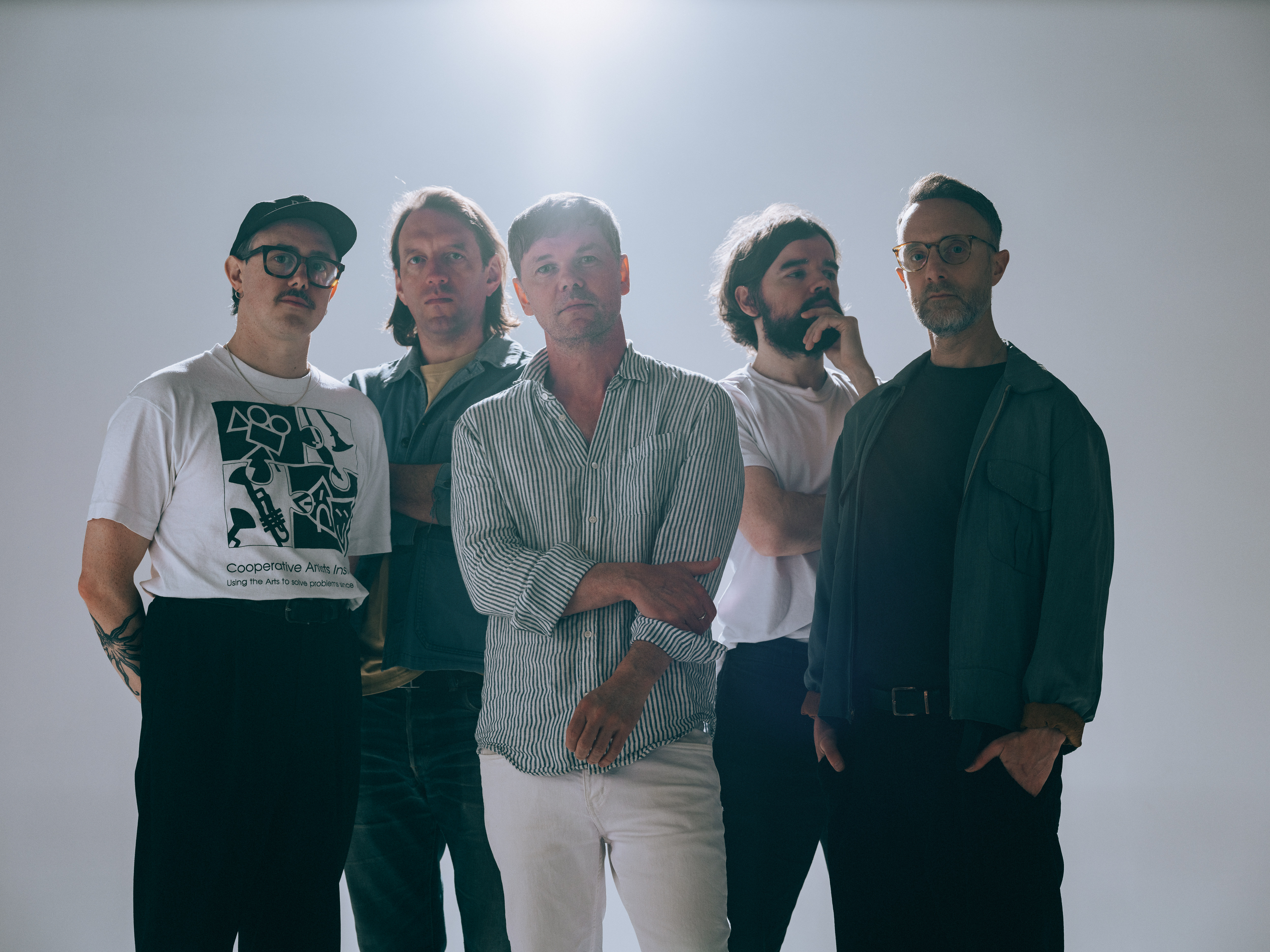
2025 was a great year for overdue returns, and few thrilled me more than Idlewild’s. The band’s tenth studio album arrived six years on from 2019’s Interview Music, and twenty years since their last top twenty record, 2005’s Warnings/Promises. Idlewild is in many ways the sound of the band coming to terms with their history. They’re a band who’ve worn many stylistic jackets, from the thrilling teenage punk band who crashed the blandness of late 90’s indie to their slide into mature widescreen indie-rock on The Remote Part. It’s to their credit, and potentially their commercial detriment, that they’ve never really seemed keen on revisiting their past glories, never tried to recreate the records that mean so much to their loyal fanbase, or casual one time fans. Here, perhaps for the first time, the band turned to themselves for influence, “we were referencing ourselves, not in a nostalgic way, in a positive, creative way, realising that we had a ‘sound’ and the songs we were writing should celebrate that”.
The record arrives with a suitable crunch, courtesy of the dirgy guttural cords of Stay Out Of Place; it’s perhaps most akin to the louder tracks on Warnings/Promises, the band’s most proggy moment to date, but it also hits you with a typically soaring chorus. Roddy Woomble’s vocal emerging from the eye of the storm as he rings a certain wistfulness from the outwardly positive lyric, “I’m glad that we stayed here for a while, yes I’m glad that we lived here for a while”. From there they slide into the The Remote Part-like fizzing pop of Like I Had Before, one of those songs that reminds you that they were once singles chart-bothering indie-tykes and has you dreaming they could be that successful again. The whole thing has a greatest hits you’ve never heard before feel, a reminder of just how versatile this band can be. Whether it’s the angular punk-influenced strains of Make It Happen or the brilliant, and surely by this point contractually obliged, REM-like moment, (I Can’t Help) Back Then You Found Me, which seems to almost find Roddy poking fun at his younger-self’s literate tendencies, “you said you keep coming round, of course you would, with your copy of Under Milk Wood, quoting the lines you really wish I understood”. Perhaps the stand-out moment here is Writers Of The Present Time, its widescreen choruses are classic Idlewild, but in the tumbling guitar lines suggest the hitherto unexplored influences of 80s alternative behemoths The Cure and New Order. As the album fades out on the electronic tones of End With Sunrise, it feels like the sound of a band not just returning but rediscovering a certain swagger, one that suggests the best might yet still be to come.
13. Tugboat Captain – Dog Tale [Self-Released]
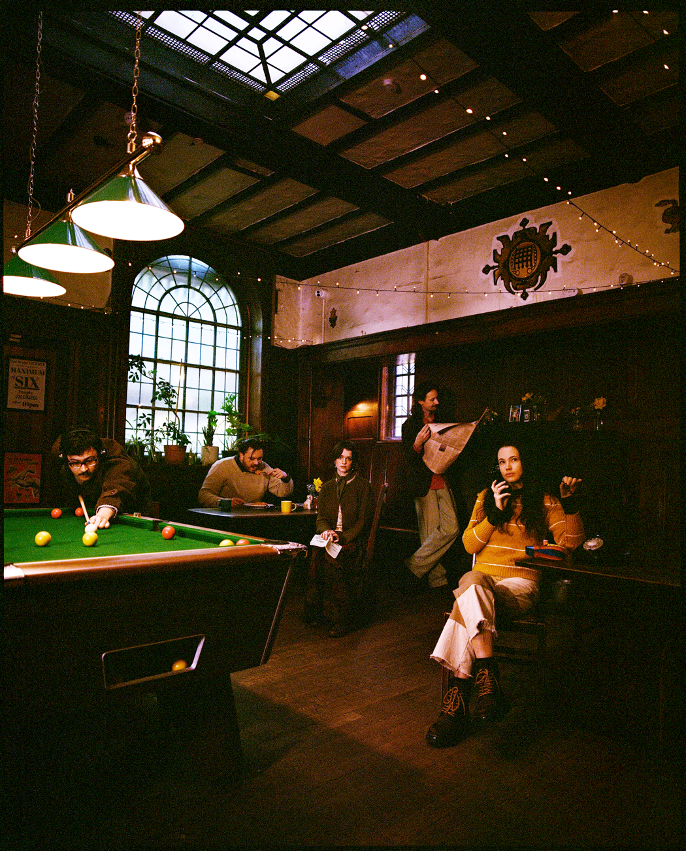
A familiar name in my annual round-ups, Tugboat Captain have quietly been making great records for a good few years now. 2025 was something of a topsy-turvy one for the band, who released Dog Tale in April, toured it throughout the Summer and then announced a live hiatus and a farewell to playing live show before the year was out. The good news is more records are still on the way, but it’s hard not to feel a little bitter that a band this consistently good have never quite found their break, especially when Dog Tale might just be their best moment yet. Dog Tale was in many ways a reflex against their previous offering 2020’s Rut. While that album still sounds great to me, the band, over time, grew to dislike the grandiose Abbey Road production, and for Dog Tale decided to write and record the whole thing in just a week in their own studio, prioritising, “novelty and excitement and freshness”.
Dog Tale is a record that finds band-leader Sox narrowing in on something he’s been exploring with his songwriting for a number of years,“I’ve been honing in on this domestic story for a long time, and I’ve been trying to focus in on this feeling of -what is it like to be me? What does home mean to me and everyone else?” This exploration comes not just from the here and now, but from digging back into the formative moments that lead us all to become who we are. It’s a theme present in the brilliant Thank God, which Sox describes as “my whole life, past, present, and future, all at once”, and one that brought him to tears in the studio at the final take. The whole track is beautifully raw, Sox reflecting on the strange experience of growing up in Kent as the child of, “Mike and Glenda, Jew and Filipino who spent their lives together”, hearing his Sister go from singing songs in the back of the car to soundtracking his commute to work, and feeling inadequate at the growing successes and wages of his schoolmates. It feels like a culmination of everything that brought Tugboat Captain here, the song they were always built to write. Thankfully it’s not the only stand out moment here, the title track is tribute to the much loved Cavendish Arms in Stockwell (hat tip to the niche lyrical joke, “the floor has a chequered reputation”) presented via the medium of a series of comparison to various dog breeds, before sliding into a melancholy musing on good time past, “I don’t come round here anymore”, before ending on a wonderfully odd, and surprisingly jaunty, whistle. Perhaps a result of their no-overthinking policy, Dog Tale is also Tugboat Captain’s most sonically eclectic record to date, whether it’s the Bossa Nova shuffle of Bored, or the Andy Shauff-like woodwind-folk and intimate details of Nothing Embarrassing. Getting better at writing songs about the struggle of being a musician is perhaps not the path any musician wants to take, but there’s something about sticking at it, still creating, still trying to improve, and making something that moves the few, even if it never reaches the many.
12. Esther Rose – Want [New West Records]
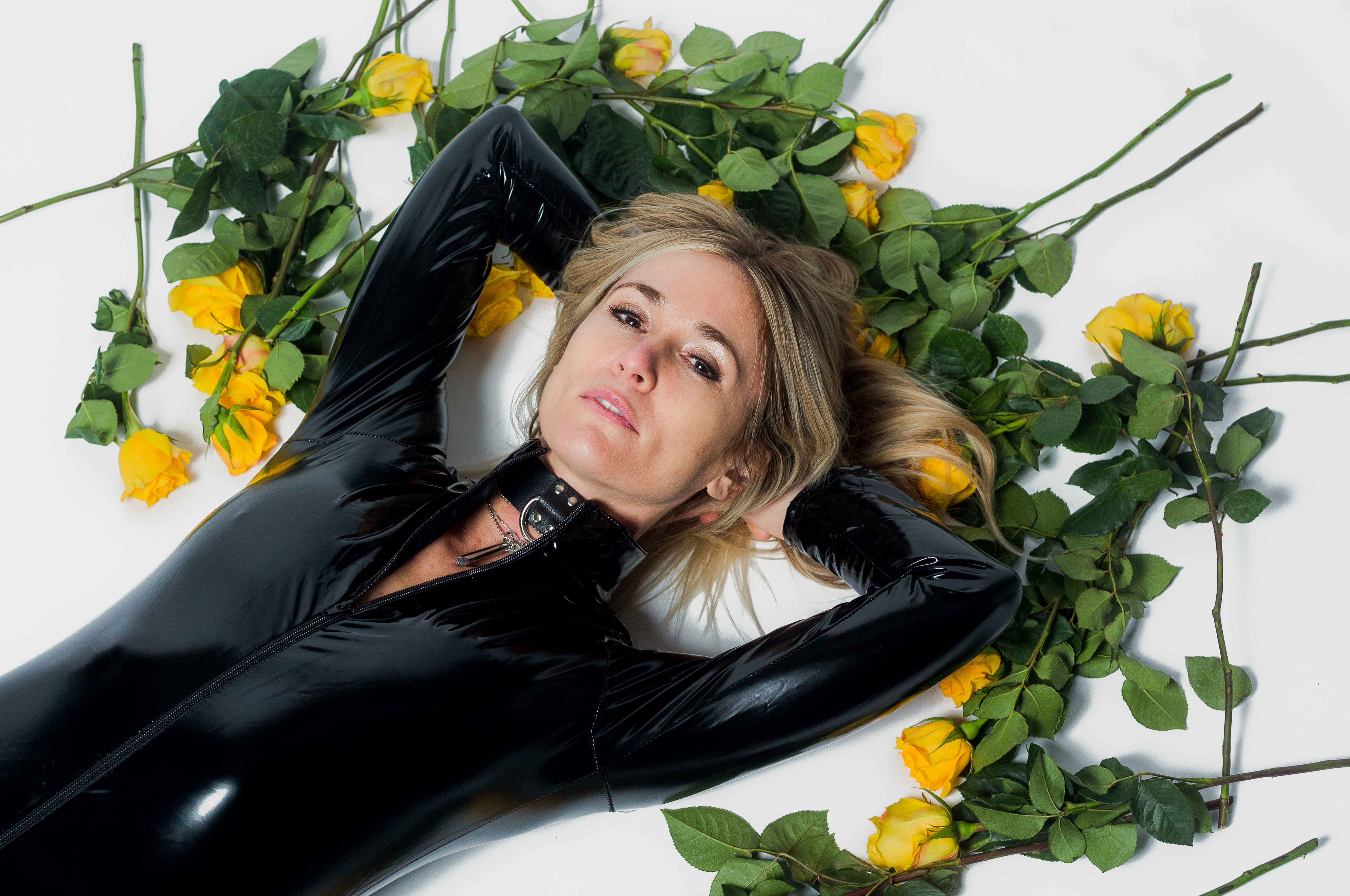
If the year ends in an odd number, then it seems to be an inevitability that Esther Rose will release a great record that ends up in my albums of the year list. Want is the follow-up to 2023’s Safe To Run, Esther’s first release on New West Records, a record that was nearly her last. Exhausted and emotionally depleted by the pace of her touring schedule, she made the decision that there was no way for things to continue as they were. Esther stopped drinking, went to therapy and gradually the songs started to flow without any pressure for them to be any kind of finished product. The Therapy LP, as she branded it, came out in various styles, the intriguing prospect of an electro-pop or solo acoustic record never materialised, and instead came Want. Quite possibly Esther’s most reflective album to date, it found her looking inward for inspiration, “deep-diving into my subconscious”, and examining her relationship with fear, desire and taking accountability for her actions.
The cover of Want shows a pair of Esthers, one a PVC-clad biker and the other in a flowing, white dress, a stereotype of the apocryphal angel and devil on her shoulders, the two sides of a personality she explores throughout the record. Throughout, we find Esther in moments of contrast, at her lowest ebbs and in those cleansing moments of pulling herself out of the mire, following her destructive tendencies and questioning why she keeps going back to that place. The destruction is there in the country-grunge stylings of New Bad, when she sings, “I am bad, I’m not good, don’t do what I said I would, and I’ll make my mama cry with the hell I raise tonight”, but ultimately concludes at the song’s close for better or worse, “no regrets”. Elsewhere though, we find Esther delving into the experiences that brought her here, scratching the surface with pained detail. In Had To, with it’s Cowboy Country-guitars and shuffling drum rhythms, Esther looks at her relationship with both alcohol, “whiskey, keep me warm in times of winter, tequila when I’m dancing in the rain, drinking just to cope with the attention and drinking when they forget my name” and the simple things you lose from living the touring lifestyle, “I need a hit tune or a breakthrough, want to see you In my living room”. Perhaps the song that best surmises the way this record exists at a turning point is Scars, featuring the perfectly paired vocals of the previously mentioned Dean Johnson, it touches on the idea of owning your past and the marks it has left on you along the way, “I’ve got scars, that you cannot see, love them for what they gave to me”. The album is fittingly bookended by linked versions of the title track, the opening Want is a list of desires from the most mundane, “want to take your hand as we drive to the store”, through to huge life events, “want to get married but I don’t want kids, want to believe in real partnership”, career goals, “want to hear a pin drop in a sold-out room” and some beautifully human impossibilities, “want a puppy, but I don’t want a mess want to know where I’m going without GPS”. What could sound like a shopping list of desires quickly becomes something deeper, as if she’s confronting herself and saying do you really want these things? Do you really need them to make a life? “Believe in real life, I’m feeling real life, I’m bleeding real life, I’m needing real life”. For the closing, Want Pt. 2, Esther seems to spin a song out of realising the road to contentment isn’t paved with wants, but in accepting who you are and opening yourself up to the possibilities of connection. The whole thing becomes a Laurel Canyon-esque slice of soaring positivity as a collective of voices repeat the line, “your heart will keep breaking until it stays open”, a mantra for living in a space that works for you. Want has the feel of a record that really took some work to bring it to life, but as a listener, it’s no chore at all to hear a songwriter still very much at the peak of a game, well that’s simply a pleasure.
11. Fortitude Valley – Part Of The Problem, Baby [Specialist Subject]

Something of a remarkably ungnarled veteran of the UK’s DIY-scene, Laura Kovic has spent a lot of time playing in other people’s projects. If you’ve got a few songs in need of a layer of sheen, then Laura’s your girl! Most notably, she was a key cog in the Tigercats wheel, but if you’ve been to more than a handful of indie-pop shows, you’ve almost certainly seen Laura play something, sing something, and generally make things better. So perhaps it was no real surprise when the time came that her own songs would be really rather good. The evidence was all there on the debut Fortitude Valley album, yet for this, their second album,“the dials have all just been turned up a bit”, and the results are thankfully spectacular.
A remarkably coherent listen, Part Of The Problem Baby picks up on themes explored on their debut album but seems to scratch deeper. The themes of distance and communication, or a lack thereof, are near constants here. A native Australian, Laura queries what it is to live a double life on opposite sides of the globe, always missing something and someone wherever you go. This is particularly evident on a pair of singles, Sunshine State, which finds Laura reflecting on moving away and trying to reconnect with “my younger, more melodramatic self and catch-up with her”, and Oceans Apart, which even borrows its title from a The Go-Betweens album to hammer home the Australian-longing/loathing conundrum. If the singles are the sprightlier distance number, the deeper cuts dive into the almost painfully intimate moments where what’s in your head and what you’re saying don’t always tie up. As a listener, it’s at times like being thrown into the midst of a Peep Show episode, hearing the inner monologue and outer expression in unison. It’s there in the bouncy indie-pop of Don’t Want You To Be Near Me? As Laura asks, “did I misread every queue you sent me? I was so sure you’d write me into the ending”, and in Totally, “you looked at me with such intent, I thought you wanted a fight, so I’m having an existential crisis on a Saturday night”. Particularly wonderful is the double header of the luxurious harmonies and plea for someone to open up that is Take Me Away I’m Dreaming and The Amber Arcades-like title track, which painstakingly depicts the inevitability of an ending, “we’re a part of the problem, baby but we still complain, made a list of all the things we hate but never try to change”. This feels like a giant leap forward for Fortitude Valley, everything here is more focused and direct than before, and while it might not solve all your problems, it’ll definitely make you forget them for a while.
Check back soon to discover my top ten records of the year… (and why not take a gander at my favourite EPs if you’re not all listed out)
 For The Rabbits